

What Causes Low Water Pressure and How to Fix it
Low water pressure can occur due to internal and external plumbing issues. However, fluctuations in water pressure aren’t uncommon and aren’t automatically indicative of a problem.
Perhaps your pipes are corroded. Maybe the mains supply is undergoing maintenance. Or could you just be using too many taps at once? There are numerous reasons for inconsistent water pressure, but not all require a callout to a plumber.
What are the Internal Causes of Low Water Pressure?
The usual cause for low water pressure inside your home is restricted water flow. Whether this be due to debris, blockages, leaks, or airlocks, if your water doesn’t flow as intended, you will notice a pressure reduction. So, what are the sources?
A Partially Closed Stop Tap
Problem: If your stop tap is partially closed, the water flow will be restricted, affecting your household water pressure.
Solution: Ensure your stop tap is turned fully anti-clockwise to maximise flow and allow an adjustment period of an hour before testing your water pressure again. If there’s no change, the culprit might lie elsewhere.
Corroded Pipes
Problem: Corrosion can create holes that allow leaking, which stops water from flowing correctly.
Solution: Replace your corroded pipes with modern plastic pipes. Plastic pipes aren’t susceptible to the mineral build-up that eventually destroys steel and lead alternatives.
Problem: Corroded materials can build up, narrowing the space within the pipe and preventing the free movement of the water.
Solution: Re-pipe. A build-up of minerals and materials is challenging to remove and risks causing more damage to your pipes.
Problem: Air trapped within your pipe can reduce your water pressure significantly.
Solution: Release the trapped air by turning off the water supply, draining all water pipes by flushing toilets and running taps, and slowly turning the water back on. This will slowly reintroduce water flow and push out the trapped air.
Blocked or Faulty Taps and Showerheads
It could be that your water pressure hasn’t changed at all. And you’re only perceiving this due to the feeling of the water when it leaves your taps and shower.
Problem: The aerators of taps and showerheads can become clogged with debris and limescale, significantly impacting water pressure.
Solution: Clean your aerators regularly to prevent a build-up of debris. You may find descaling necessary if you live in a hard-water region.
What are the External Causes of Low Water Pressure?
External factors that cause low water pressure include mains water supply issues, essential maintenance, shared supply, high demand and even geographic location. But what can actually be done to fix these problems? In most of these cases, it’s the responsibility of your local council or water authority to solve the trouble. However, you can address some yourself.
Mains Water Supply Problems
Problem: Bursts and leaks in the supply network can reduce pressure throughout their service areas.
Solution: Contact your local water supplier to discover whether the reduced water pressure is a known issue. If not, this may alert the company and incite an investigation. Conversely, the mains supply may not be experiencing problems, and a plumber could be required to find the source of your problem.
Maintenance of Water Supply Networks
Problem: Maintenance and emergency works can significantly, albeit temporarily, impact the water pressure in your home.
Solution: Check online for regular updates on the status of the works, so you can understand when the water pressure may be restored.
Shared Water Supply
Problem: Older properties may utilise shared supply networks, which increase demand and reduce the water pressure for the whole area.
Solution: If the lower water pressure is a problem for your household, consider applying for a separate, single mains connection. Alternatively, install a booster pump to increase the water pressure for your home.
Geographical Location
Problem: High-elevation homes may naturally experience lower water pressure. This can also occur if your home is placed towards the end of a supply network.
Solution: Install a booster pump (with permission from your local water authority) to give your water pressure a nudge.
How to Fix Low Water Pressure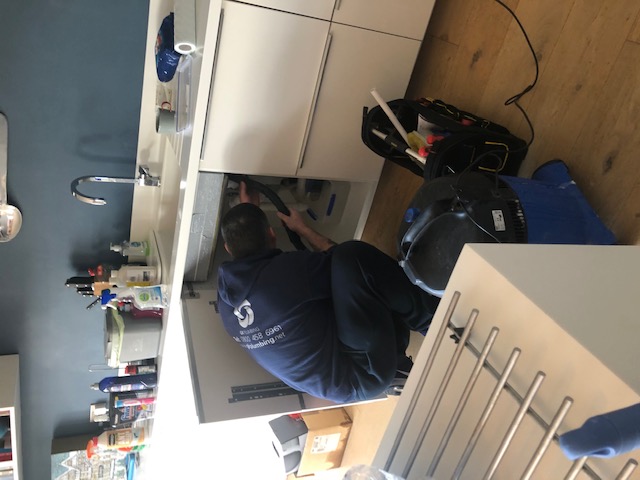
Contact a plumber if you discover your low water pressure because something is going wrong with your property. At GK Plumbing, we will visit your home to diagnose the problem and promptly offer cost-effective solutions.
We put our customers first, ensuring you are satisfied with a job well done. That’s why we are so proud to have a 9.55 Checkatrade score from over 200 reviews!
Get in touch with our team today if you need a water pressure investigation.


