Electric Boiler vs Electric Radiators: Which Is Better?
Choosing between an electric boiler and electric radiators isn’t straightforward. Both promise low-carbon heating, but they work differently, cost different amounts to run, and suit different properties. Keep reading for comparisons of how each system works, its efficiency, running costs and size. You can decide which is right for your home.
Once you’ve chosen, our electric boiler installation team can take care of the rest.
What Is an Electric Boiler?
An electric boiler heats water using electricity instead of gas or oil, so it produces no harmful emissions on site. Like gas boilers, electric models come as:
- Combi boilers (combination)
- Heat-only boilers (regular)
- Smart boilers
- System boilers
Their efficiency makes them a popular choice for small households and commercial properties.
What Is an Electric Radiator?
An electric radiator warms a room without relying on plumbing or pipework. It works independently of your central heating system, and its near-100% efficiency makes it a sustainable option for any property type.
How Does an Electric Boiler Work?
An electric boiler connects to the mains electricity supply, much like a kettle. Electricity heats an element, and cold mains water passes over that element to be heated. This heated water is then supplied to your taps and radiators.
How Does an Electric Radiator Work?
An electric radiator also connects to the mains power supply, but it converts electricity into heat directly. Inside, a thermodynamic fluid expands and heats up as electricity passes through it. As the fluid expands, it releases heat into the room.
Which Is More Efficient: Electric Boilers or Electric Radiators?
Both electric boiler and radiator systems are considerably more efficient than a standard gas boiler, which rarely exceeds 90% efficiency.
- Electric boilers achieve a 99-100% efficiency rating, though they often carry an ErP rating of D.
- Electric radiators are typically 100% efficient, converting all their energy into heat and pairing well with solar panels and renewable batteries. Running costs can be roughly half those of hydronic radiators in some cases.
Neither system burns fuel, so both produce no carbon emissions and can help lower your energy bills.
How Much Do Electric Boilers and Radiators Cost?
Electricity typically costs more per kWh than gas (around 31p vs 5p), though some tariffs charge less overnight. Even so, electric systems can still work out cost-efficient depending on usage.
Electric boiler price
- Buying and installing a new unit: £900 to £4,500, depending on type and size
- Typical annual running cost: up to £1,568, depending on property size and usage
As an example, a 12 kW boiler running 6 hours a day at 22p per kWh works out at:
- Annual: up to £1,584
- Monthly: up to £132
- Daily: up to £4.40
- Hourly: up to 18.3p
Electric radiator cost
- Buying a single unit: £25 to £950, with smaller plug-in models cheapest to buy and run
- A 3-bedroom home with 12-14 radiators: roughly £300 to £13,300 in total, plus up to £500 for installation
As an example, a 2,000W heater running 6 hours a day at 22p per kWh works out at:
- Annual: £2,640
- Monthly: £220
- Daily: £7
- Hourly: 30p
What Size Electric Boiler or Radiator Do I Need?
Electric boiler size
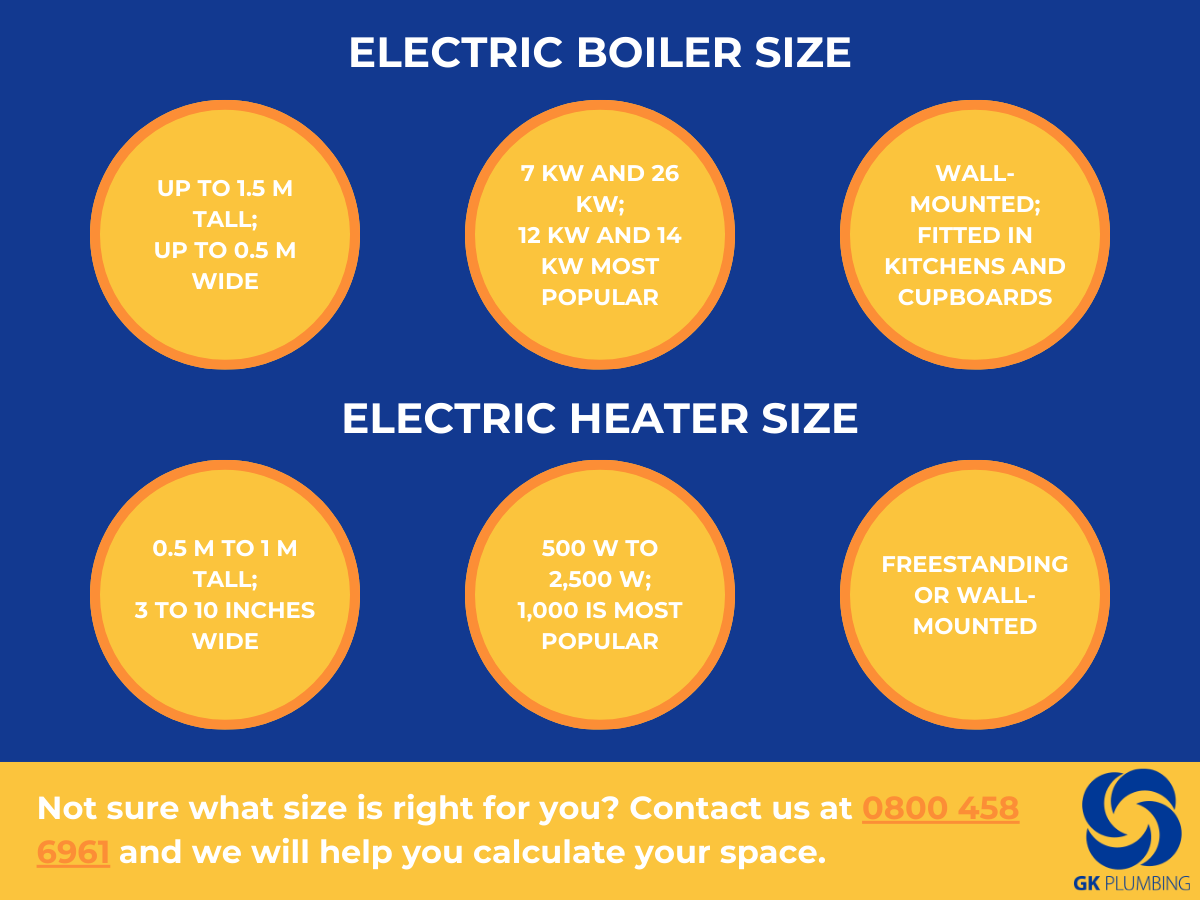
Electric boilers are larger than radiators, typically no more than 1.5m tall and 0.5m wide. Their output usually ranges from 7kW to 26kW, with 12kW and 14kW the most common. Most are wall-mounted in a kitchen or tucked into a storage cupboard.
Electric radiator size
Electric radiators are considerably smaller, usually 0.5m to 1m tall. Wattage typically ranges from 500W to 2,500W, with 1,000W the most common. They’re either freestanding (popular in communal areas) or wall-mounted (suits bathrooms and kitchens).
The Benefits of Each Electric System: Boiler vs Radiator
Electric boilers
- Achieve 99-100% efficiency
- Suit small spaces, such as flats
- Low-maintenance, with no gas leaks, carbon monoxide or explosion risk
- Compatible with underfloor heating and radiators
- Offer precise electronic controls and smart home integration
Electric radiators
- Convert almost all electricity into heat, with minimal waste
- No pipework needed, so installation is simple and non-disruptive
- No moving parts or combustion, meaning little maintenance
- No risk of carbon monoxide leaks or explosions
- Available in small, portable options to suit any space
Electric Boiler vs Electric Radiator: Which Should I Choose?
There’s no single right answer, as the best choice depends on your property and budget. Both systems are highly efficient and considerably kinder to the environment than gas alternatives. Over time, an electric boiler is likely to work out cheaper than running multiple electric radiators. It also comes with a broader range of benefits.
Our engineers have experience installing all types of boilers, including the increasingly popular electric boiler. Visit our electric boiler page for more information, or read our guide on switching to an electric boiler system.
Contact our team today to discuss your options.